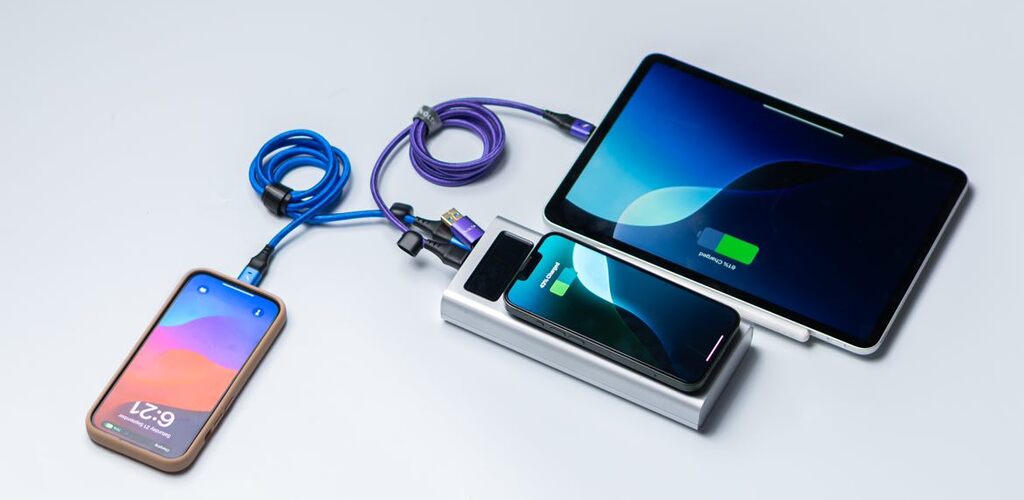
The Evolution of Charging Technology: What’s Next?
The evolution of charging technology has experienced remarkable advancements over the past few decades, transitioning from cumbersome, slow chargers to fast, wireless charging solutions that are changing the way we power our devices. In the early 2000s, charging was predominantly done using wired connections, which limited user mobility and convenience. However, as smartphones became ubiquitous, the demand for quicker and more efficient charging methods surged. Fast forward to today, we see technologies such as USB Power Delivery and Qualcomm's Fast Charge that allow devices to charge up to 70% faster than traditional chargers, making power accessibility virtually seamless.
Looking ahead, the future of charging technology appears promising with innovations on the horizon. One of the most anticipated developments is the rise of solid-state batteries, which not only promise to charge faster but also offer greater energy density and safety compared to current lithium-ion batteries. Furthermore, the expansion of wireless charging technology, such as resonant inductive charging, aims to eliminate charging cords altogether, paving the way for charging solutions embedded in furniture and public spaces. As we continue to embrace the Internet of Things (IoT), charging technology will further evolve to support an increasing number of devices, transforming how we interact with the connected world.
Counter-Strike is a popular first-person shooter game that pits teams of terrorists against counter-terrorists in various objective-based scenarios. The game has evolved over the years, leading to versions like Counter-Strike: Global Offensive, which has a thriving competitive scene. For gamers looking to enhance their setup, consider finding the Top 10 iphone desk stands to optimize your playing experience.
Wireless Charging: Is It the Future of Powering Our Devices?
The advent of wireless charging technology has sparked significant interest and debate regarding its potential to revolutionize the way we power our devices. Unlike traditional charging methods that rely on cables and plugs, wireless charging utilizes electromagnetic fields to transfer energy from a charging pad to the device, providing a seamless and convenient user experience. As more devices, including smartphones, smartwatches, and even electric vehicles, begin to incorporate this technology, many are left wondering: is wireless charging truly the future of powering our devices?
One of the main advantages of wireless charging is its ability to reduce wear and tear on charging ports and cables, potentially extending the lifespan of our devices. Moreover, the evolution of wireless charging standards, such as Qi and PMA, continues to improve efficiency and compatibility across a variety of devices. However, challenges remain, including slower charging speeds and the need for precise alignment between the device and the charger. As innovations in this space continue to emerge, it is clear that while wireless charging may not completely replace traditional methods in the near future, it certainly plays a crucial role in the ongoing evolution of how we power our everyday technology.
How Fast Charging is Revolutionizing Our Daily Tech Experience
The advent of fast charging technology has dramatically transformed our daily tech experience, allowing us to power up devices in mere minutes rather than hours. With smartphones, tablets, and laptops becoming essential tools for communication, work, and entertainment, the demand for quick and efficient charging solutions has skyrocketed. According to recent studies, users can now achieve a full charge in less than an hour, a game-changer for those constantly on the go. With brands racing to offer the most advanced fast charging capabilities, consumers are benefiting from an increasing number of options and improved charging standards.
Moreover, the impact of fast charging extends beyond personal convenience; it signifies a shift towards greater productivity. With busy lifestyles, the ability to get a significant battery boost during short breaks or commutes has become crucial. As we rely more on our devices, innovations in fast charging technology, such as USB Power Delivery and Qualcomm Quick Charge, have enabled us to stay connected without interruption. This newfound freedom not only enhances user experience but also fosters a tech-savvy culture where rapid charging solutions are not just preferred, but expected.